Mobile care can bring an addiction treatment visit closer to someone’s daily life. A Los Angeles study example shows how filling a buprenorphine prescription could still involve a nearby pharmacy.
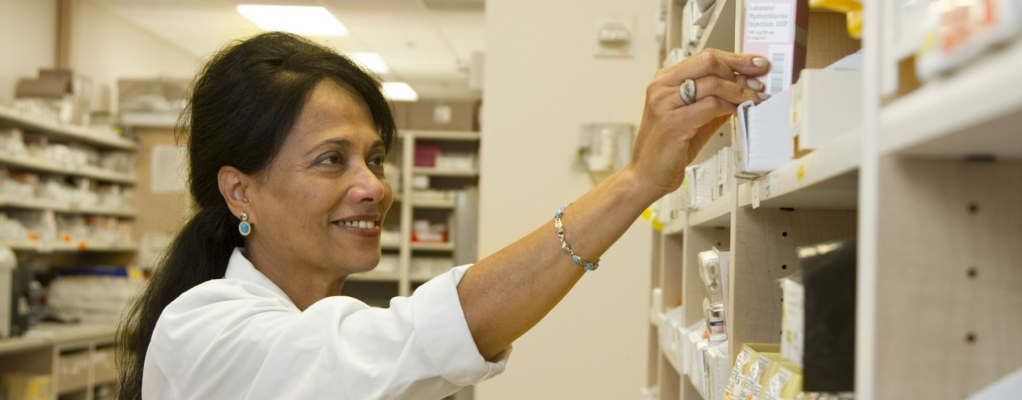
Stock photograph of a pharmacist selecting medication. The person, pharmacy and medicine pictured are not part of HPTN 094. Photo: National Cancer Institute / Unsplash.
A mobile addiction treatment team can help arrange care on a van while a pharmacy supplies the medication. In Los Angeles during the HPTN 094 study, that sometimes meant parking near a pharmacy where a participant could pick up buprenorphine after meeting with a peer navigator, according to study investigator Steven Shoptaw, PhD.[1][2]
Peer navigators in the study had personal experience with opioid use disorder or a shared community background involving addiction and recovery. They helped participants identify needs and reach services.[2] The pharmacy example shows how that help could extend beyond the mobile visit.
A Buprenorphine Prescription Could Lead to a Nearby Pharmacy
Shoptaw, vice chair of research and emeritus professor in family medicine at UCLA, described the Los Angeles practice in written comments to AddictionHelp.com. He is the study’s first author.
Sometimes, he explained, the team parked near a CVS or Walgreens that carried buprenorphine. The arrangement could be easier and preferable to the participant, “with the participant leaving the van to pick up the medication at the end of their navigation visit.”[1]
That detail separates two parts of getting treatment: meeting with the care team and obtaining the prescribed medicine. In this example, the pharmacy remained part of the process even though the care visit happened on the mobile unit. Shoptaw’s account describes how the Los Angeles team sometimes worked during the study. It does not establish current stock at those pharmacies or when someone took a first dose.
The published study describes buprenorphine being available on the unit or by prescription.[2] Shoptaw added an important detail about how that worked: during the study, buprenorphine supplied by the funders could not be stored on the mobile units in any of the five cities. Access varied by city, he said, and Houston offered buprenorphine by prescription only.[1] The Los Angeles pharmacy example shows one way the team helped participants complete that outside step.
Methadone involved help connecting with a methadone clinic and was not dispensed on the study vans.[2] These different arrangements are worth asking a program to explain before a visit.
The First Research Visit Was a Screening Visit
Shoptaw also distinguished joining the study from beginning navigation. Everyone first came to a mobile unit for research screening. After learning about the study and consenting, participants completed assessments that included questionnaires, an interview, an examination, and urine and blood collection.[1]
Eligibility was reviewed at a later visit before participants were assigned to a study group. Shoptaw said those assigned to mobile care then met their peer navigator and began a navigation session on the unit. People in the comparison group met their navigator and had an off-unit session arranged.[1]
The study protocol independently confirms that screening and enrollment were separate, with enrollment required within 30 days of screening.[3] This was a research procedure, not a waiting period prescribed for ordinary addiction treatment. Neither that sequence nor the pharmacy example tells us that medication was taken during the first screening visit.
What the HPTN 094 Study Found
The November 4 paper analyzed 409 adults without HIV who injected drugs and had opioid use disorder in five U.S. cities.[2] Both groups received 26 weeks of peer navigation. One also received integrated services on mobile units, while the other received help reaching community services.[2]
At 26 weeks, confirmed medication treatment for opioid use disorder was 14.8% in the mobile group and 10.7% in the comparison group.[2] The difference was not statistically significant. Neither was the difference in use of HIV prevention medication, called PrEP.[2]
By 52 weeks, four people in the mobile group and 13 in the comparison group had died. This was a secondary finding in the group without HIV, and the trial was not designed to establish a mortality benefit. Shoptaw called the signal in the group without HIV post-hoc and said it needs confirmation in studies designed to test it in advance.[1][2] The pharmacy example cannot explain why the death counts differed.
Questions to Ask a Mobile Addiction Treatment Team
For someone considering a mobile program, the Los Angeles example suggests a few concrete questions:
- Which assessments and treatment services can happen during my visit?
- If medication is prescribed, will I receive it here or collect it from a pharmacy?
- If I need another pharmacy or treatment provider, what help can the team give me to complete that step?
- Who should I contact if I cannot get the prescription filled, and when is my next visit?
These questions turn a general offer of mobile care into a clearer plan. For background on the medicine itself, read about buprenorphine treatment and starting care. The useful next step is to establish both what the mobile team can provide and who will help with any care that happens beyond the van.
Get Treatment Help
If you or someone you love is struggling with addiction, getting help is just a phone call away, or consider trying therapy online with BetterHelp.
Exclusive offer: 20% Off BetterHelp*Following links to the BetterHelp website may earn us a commission that helps us manage and maintain AddictionHelp.com. *Get 20% off your first month of BetterHelp. Offer valid for new BetterHelp users only. Offer cannot be combined with insurance.