Relapse Prevention
Relapse rarely happens out of nowhere — it builds in stages you can learn to spot. A written plan, sober support, and knowing your triggers help you catch it early and recover fast from a slip.

Battling addiction & ready for help?
What Is Relapse Prevention?
Relapse prevention is a set of practical skills and a written plan that help you stay in recovery when life gets hard. It is not a test of how much willpower you can summon. Early sobriety runs on raw effort. Lasting recovery runs on knowing your warning signs, having a move ready for each one, and keeping people close who can step in before a craving turns into a slip.
The difference is simple: hoping you stay well versus having an actual plan for the moments you are most likely to use.
Here is the part most people get backwards. A return to use is common on the road to lasting change, and treating it as a moral failure makes it more dangerous, not less. Researchers who study how behavior change actually happens describe relapse as a frequent, recoverable part of the process, something to learn from rather than a verdict on your character[1].
People cycle, they stumble, and they get back up wiser about what tripped them. A slip is information, not a verdict. The whole skill is catching the slide early, while it is still a feeling and not yet a drink or a dose.
Coming back after time clean or sober? Your tolerance has dropped, and the safe way back is not alone.
- If you have been off opioids or alcohol for a stretch and feel pulled to use, do not go back to your old amount. Tolerance falls fast during any break, and the dose that once felt normal can now stop your breathing. This is how many fatal overdoses happen, and it is preventable.
- Tell one person right now and get to a medical detox. Coming back through detox with medication is far safer and easier than riding out withdrawal alone, and no one there will judge you for showing up.
- If you are having thoughts of suicide or self-harm, call or text 988. Say it out loud to someone tonight.
- Call SAMHSA’s free, confidential helpline at 1-800-662-HELP (4357), 24/7, for treatment and support near you.
- Relapse prevention is a plan, not just willpower. Skills and a written plan protect recovery far better than gritting your teeth.
- A slip is information, not failure. Relapse is common on the road to lasting change, and acting fast matters more than the slip itself.
- Relapse starts long before the first use. It usually moves through emotional, then mental, then physical stages, and catching it early is the whole game.
- Medication lowers relapse risk. For alcohol and opioid use disorder, the right medication makes staying in recovery markedly easier.
Relapse Usually Unfolds in Three Stages
A return to use is rarely a single moment. It builds, often over days or weeks, and it tends to move through three stages. The earlier you catch it, the easier it is to turn around. By the time the bottle is in your hand, you have already missed several quieter chances to step in.
Emotional Relapse Comes First
In emotional relapse you are not thinking about using at all, but your behavior is setting the stage for it. You start isolating, bottling up feelings, skipping meetings, sleeping badly, and letting self-care slide.
Mental Relapse Is the Tug-Of-War
In mental relapse, part of you wants to use and part of you does not. You begin romanticizing past use, remembering only the good parts, bargaining, planning, or looking for a situation where it might happen.
Physical Relapse Is the Actual Return
Physical relapse is the return to use itself. Most relapse-prevention work lives in the first two stages, because by the third the window has nearly closed.
| Stage of relapse | What it looks like | What to do |
|---|---|---|
| Emotional | Isolating, bottling feelings, skipping support, poor sleep and self-care | Name it, get back to basics, eat and sleep, call someone before you feel “bad enough” |
| Mental | Romanticizing use, bargaining, planning, testing high-risk situations | Tell a person today, leave the situation, play the craving forward to how it really ends |
| Physical | The first drink, dose, or use | Stop and get safe, tell someone immediately, get back to support, do not use alone |
Know Your Triggers and High-Risk Situations
A trigger is anything that nudges you toward using: a person, a place, a time of day, a feeling. You cannot dodge every trigger forever, so the goal is not a trigger-free life. The goal is to see them coming and have a response ready before the craving lands.
Run the HALT Check When a Craving Hits
A simple check covers most of it: HALT, for hungry, angry, lonely, tired. Those four states quietly raise your vulnerability, and they sneak up precisely because they feel like ordinary discomfort rather than danger.
When a craving hits out of nowhere, run the list:
- Have you eaten?
- Are you sitting on anger you have not named?
- Have you been isolating?
- Are you running on no sleep?
Usually one of them is the real culprit, and the fix is concrete rather than mysterious: eat something, call someone, take a walk, go to bed.
Watch the Predictable High-Risk Spots
Beyond HALT, certain situations carry their own pull. Old friends and old neighborhoods, certain bars or parties, payday, big emotions good or bad, and the loose, unstructured hours when boredom sets in all belong on your radar.
Build Coping Responses and a Written Plan
Knowing your triggers only helps if you have decided in advance what to do about them. A craving is not the moment to invent a strategy from scratch, so you build the strategy now, while you are clear-headed, and write it down. The plan does not need to be long. It needs to be specific and on you when you need it, a card in your wallet or a note on your phone.
A Workable Plan Names Four Things
Keep it concrete enough that it makes the decision for you when your own judgment is shaky:
- Your personal warning signs — the behaviors that mean you are sliding.
- Who you will call — names and numbers, ready before you need them.
- What you will do instead — the concrete action that replaces using.
- Where you will go — a meeting, a friend’s place, anywhere safer.
For each top trigger, write the response right next to it. The version of you mid-craving is not the version who should be choosing.
Ride the Craving Like a Wave
When a craving does come, treat it as a wave rather than a command. Cravings rise, crest, and fall, usually within minutes, whether or not you act on them. Delay any decision for ten minutes and the urge is already weaker.
Call someone and say “I am craving right now” out loud, which breaks its secret grip. Change your surroundings, drink water, eat, breathe slowly. None of it is dramatic. It just buys time, and time is on your side.
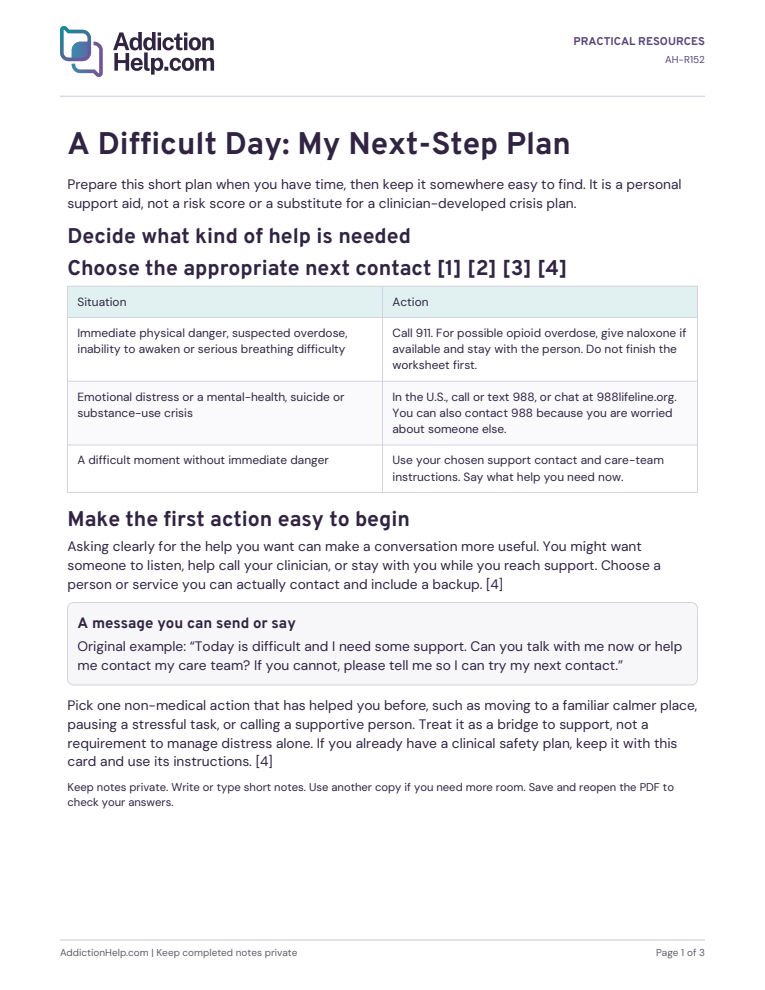
AddictionHelp.com · Practical resources
A Difficult Day: My Next-Step Plan
Prepare a short contact-and-next-step plan for a difficult day. If you have used again or want to discuss a different care plan, use the relevant companion guide.
3-page fillable PDF · Free · No signup
Read A Difficult Day: My Next-Step Plan online
For a related situation:
Lean on a Sober Network and Your Recovery Capital
If you change only one thing, make it this. The strongest evidence on how recovery sticks points straight at your social world. People stay well largely by trading a using-centered network for a sober, supportive one and by building the confidence that they can cope with ordinary life without the substance[2].
Recovery is rebuilt with people. That is exactly why “just stop” so often fails and why showing up to a room full of others doing the same thing works.
Recovery Capital Grows the Longer You Stay Supported
The personal and social resources that hold recovery up, often called recovery capital, tend to grow the longer you stay supported[3]. Early on it can feel like you are running on empty. Give it time, keep showing up, and the reserves build.
A support group is the fastest way to find a few people who get it, and there is more than one kind, so fit matters more than brand. Sponsors, sober friends, counselors, and family in your corner all add to the same reserve.
Relapse is common, and treating it as a moral failure makes it more dangerous, not less. Researchers who study how lasting change happens describe relapse as a frequent part of the road to recovery, something to learn from rather than a judgment on your worth[1]. The people who recover are not the ones who never stumble. They are the ones who treat a stumble as information, act on it fast, and keep going. Shame keeps a slip secret. Naming it gets you back.
Medication Can Lower Your Relapse Risk
For two of the hardest addictions to stay ahead of, alcohol and opioids, medication is one of the most effective tools you have, and it is badly underused.
Medications for alcohol use disorder can cut cravings and the pull to drink. Medications for opioid use disorder, such as buprenorphine and methadone, steady the brain, blunt cravings, and sharply lower the risk of return to use and of overdose.
None of this is a moral compromise or trading one addiction for another. It is treatment, the same way insulin is treatment, and it makes the daily work of staying in recovery far more doable. If you are at high risk of relapse, ask a clinician whether medication fits your situation.
What to Do if You Slip
A slip is not the end of your recovery unless you decide it is. The difference between a brief lapse and a long, dangerous return usually comes down to what you do in the next few hours. Act fast and do three things.
Stop and Get Safe First
If you have been off opioids or alcohol for any real stretch, your tolerance has dropped, and going back to old amounts can be fatal. Do not use alone. If you need to come off again, do it through a medical detox, where medication makes it far easier and safer than riding it out solo.
Tell Someone Immediately
Tell a sponsor, a friend, a counselor. A slip kept secret tends to grow, and a slip spoken out loud tends to stop.
Get Curious, Not Condemning
What was the trigger? Were you HALT? Which warning sign did you miss? That is not excuse-making. It is exactly how change gets built[1].
One slip does not erase your progress, and you are still in this. If the slip has become a return to regular use, that is a signal to step your support back up, not to start over from zero. Learn how to stay in recovery → and, if you need to, move back through the stages of recovery with help.
Where to Start
Pick the one piece you can act on today and do it before the day ends. The highest-leverage first move is usually connection: find one support group and get to a meeting this week, in person or online.
Then write your plan, your warning signs, your HALT check, who you will call, and what you will do instead, on a card you keep on you. None of it has to be perfect. It just has to start, because recovery is built one supported day at a time, and the supports grow as you go. For the bigger picture and the many roads through lasting recovery, walk through the full recovery guide.
The next step doesn’t have to be a big one. Our treatment centers directory can point you to the right level of care. Reaching out today is a real step forward — and one you can make right now.
Frequently asked questions
What is relapse prevention?
It is a set of practical skills and a written plan that help you stay in recovery through the hard moments, rather than relying on willpower alone. A good plan names your warning signs, your triggers, who you will call, what you will do instead, and where you will go. The idea is to decide your moves now, while you are clear-headed, so a craving cannot catch you without a response ready.
What are the three stages of relapse?
Relapse usually builds through emotional, then mental, then physical stages. Emotional relapse is isolating, bottling feelings, and poor self-care, before you are even thinking of using. Mental relapse is romanticizing past use, bargaining, and planning. Physical relapse is the actual return to use. Most prevention work lives in the first two stages, because catching the slide early, while it is still a feeling, is far easier than stopping the first drink.
What are the most common relapse triggers?
The everyday ones do the most damage because they feel harmless: being hungry, angry, lonely, or tired, the HALT states. Beyond those, watch for old people and places, certain bars or parties, payday, big emotions good or bad, and loose unstructured time. You cannot avoid every trigger, so the goal is to see them coming and have a planned move ready before the craving lands.
Is relapse a failure?
No. A return to use is common on the road to lasting change, and treating it as a moral failure makes it more dangerous, not less. Researchers who study how change happens describe relapse as a recoverable part of the process, something to learn from rather than a verdict on your character. The people who recover are the ones who treat a slip as information, act fast, and keep going.
Can medication help prevent relapse?
Yes, especially for alcohol and opioid use disorder. Medications for alcohol use disorder reduce cravings and the pull to drink. Medications for opioid use disorder, like buprenorphine and methadone, blunt cravings and sharply lower the risk of return to use and overdose. This is not trading one addiction for another, it is treatment, and it makes the daily work of staying in recovery much more doable. Ask a clinician whether it fits you.
What should I do right after a slip?
Act fast and treat it as information, not failure. First get safe: after time off opioids or alcohol your tolerance drops, so never use alone and use a medical detox if you need to come off again. Then tell someone immediately, since a slip kept secret tends to grow. Finally, look at the trigger you missed and step your support back up. One slip does not erase your progress, and reaching out fast is what gets you back.
Get Treatment Help
If you or someone you love is struggling with addiction, getting help is just a phone call away, or consider trying therapy online with BetterHelp.
Exclusive offer: 20% Off BetterHelp*Following links to the BetterHelp website may earn us a commission that helps us manage and maintain AddictionHelp.com. *Get 20% off your first month of BetterHelp. Offer valid for new BetterHelp users only. Offer cannot be combined with insurance.

- Fact-Checked
- Editor