Is Naltrexone a Controlled Substance?
Naltrexone is a prescription opioid blocker with no federal controlled-substance schedule. It does not cause opioid physical dependence, but starting and stopping treatment still require safety planning.


Battling addiction & ready for help?
On this pageJump directly to a section.Show topicsHide topics
Is Naltrexone Controlled or Addictive?
Naltrexone is a prescription medicine, but it is not a federally controlled substance and does not cause opioid physical dependence. If you are worried that treatment means becoming dependent on another medication, that distinction may help. It still has side effects and important starting requirements, and it is one option among several effective treatments.[1][2]
Naltrexone blocks opioid receptors rather than activating them as methadone or buprenorphine do. It is used in alcohol and opioid treatment. The decision should consider what you can safely start, how you will continue it, and what other health needs you have.[2]
Not being addictive does not mean overdose is impossible. Trying to overcome naltrexone by taking more opioids can be fatal. Call 911 for suspected overdose and give naloxone if available.[3]
For suicidal or mental health distress in the United States, call or text 988. Call 911 for immediate danger or a medical emergency.[4]
- Naltrexone’s U.S. tablet label lists its DEA schedule as “None.” A prescription is still required.[1]
- Naltrexone does not produce an opioid high or cause the opioid dependence associated with agonist medicines.[2]
- Stopping naltrexone does not cause withdrawal from naltrexone itself. A plan is still needed for reduced opioid tolerance and a possible return to use.[2][3]
- Starting naltrexone while physically dependent on another opioid can cause severe, sudden withdrawal.[1]
What “Not a Controlled Substance” Means for Naltrexone
Controlled-substance scheduling is a legal classification; it is not a simple ranking of how safe or appropriate a medicine is for you. The naltrexone tablet label identifies it as a prescription drug with no DEA schedule. That answers the scheduling question without suggesting it can be taken without medical assessment.[1]
Naltrexone can be prescribed by a clinician licensed to prescribe medications; it does not require enrollment in a methadone opioid treatment program. The monthly injection must be administered by a healthcare professional. Availability, insurance coverage, appointment access, and the individual clinician’s services can still affect access.[2][3]
Is Naltrexone an Opioid or a Narcotic?
Naltrexone is an opioid antagonist, commonly described as an opioid blocker. It does not act like an opioid pain reliever or produce an opioid high. The useful distinction is its action and treatment purpose, rather than the sometimes imprecise use of the word “narcotic.”[2][1]
Naltrexone also differs from naloxone. Naltrexone is used for ongoing treatment; naloxone is used to reverse an opioid overdose. Receiving naltrexone does not remove the need for an overdose-response plan.[3]
Can You Become Addicted to Naltrexone?
Naltrexone is not considered addictive and does not produce the opioid tolerance or physical dependence associated with opioid agonists. You do not need an opioid taper to prevent withdrawal from naltrexone itself. That does not mean it is free from side effects or that stopping treatment has no consequences.[2][1]
Physical dependence and addiction are also different concepts. Dependence can occur during appropriate methadone or buprenorphine treatment. It does not, by itself, mean someone is misusing the medicine or failing at recovery. A medication comparison should include benefits and risks rather than treating dependence as a moral distinction.[5][6]
Naltrexone Compared With Methadone and Buprenorphine
Explain What Worries You About Medication
Ask: “I’m worried about dependence. What would starting, continuing, and eventually stopping each option involve?” Include concerns about withdrawal, work, cost, pain treatment, or stigma. A useful comparison addresses the concern behind the word “addictive.”
These medicines work differently and have different starting requirements. A nonscheduled medicine is not automatically the best option, especially if reaching the first dose would leave someone without workable withdrawal care.[2][7][8]
| Question | Naltrexone | Methadone or buprenorphine |
|---|---|---|
| How does it act? | Blocks opioid receptors without activating them as an agonist. | Activates opioid receptors: methadone is a full agonist; buprenorphine is a partial agonist. |
| Can opioid physical dependence develop from the medicine? | It does not produce opioid physical dependence. | Yes. Dependence can occur during appropriate treatment. |
| Can it treat current opioid withdrawal? | No; an adequate opioid-free period is needed before starting. | These medicines can reduce withdrawal, with medication-specific starting plans. |
| What should the decision consider? | Safe initiation, tablet or injection routine, opioid pain needs, side effects, and follow-up. | Safe initiation, access, symptoms, interactions, follow-up, and the person’s preferences. |
The pharmacology and practical distinctions above are described in SAMHSA guidance and product labeling. They are not a ranking of which patient is “more recovered.”[2][7][8][3]
If you are comparing options, explore buprenorphine treatment and methadone treatment as well. A U.S. randomized trial found that successfully starting extended-release naltrexone was harder than starting buprenorphine-naloxone; outcomes among those who started were similar. The ability to begin treatment safely is part of its real-world fit.[9]
Why Naltrexone Can Trigger Withdrawal Even Though It Is Not Addictive
Precipitated withdrawal is caused by abruptly blocking opioid activity in someone physically dependent on another opioid. It is not withdrawal from naltrexone. Symptoms can be severe enough to require hospital care, including care for dehydration from vomiting and diarrhea.[1]
Labeling recommends at least 7 to 10 opioid-free days after short-acting opioids. People transitioning from methadone or buprenorphine may remain vulnerable for as long as two weeks. A clinician must assess readiness; a calendar or negative test alone cannot guarantee a safe start.[3]
This assessment applies even if naltrexone is being prescribed for alcohol use disorder. Tell the clinician about prescribed pain medicines, tramadol, and other opioid use. Ask what support is available during the transition rather than trying to manage a difficult waiting period alone.[1]
Can You Stop Naltrexone Without a Taper?
Naltrexone does not require an opioid-withdrawal taper because it does not cause opioid physical dependence. But stopping should still be a treatment conversation. Consider how cravings will be managed, whether another medication is appropriate, and who you can contact if opioid or alcohol use returns.[2]
For opioid treatment, reduced tolerance is especially important. After time without opioids, an amount that was once tolerated can cause overdose as blocking wears off, after a missed injection, or after treatment stops. Keep naloxone available and discuss this risk with people who may need to help in an emergency.[3]
An injection cannot be taken back once administered, and its effects do not disappear immediately when you decide to stop. How long naltrexone lasts depends on the formulation. Planned surgery or new pain problems should be discussed with the treatment team.[3]
Side Effects and Medical Needs Still Matter
Nausea, headache, dizziness, or sleepiness can occur even though naltrexone does not produce an opioid high. Discuss liver or kidney problems, pregnancy, other medications, and current symptoms before treatment. For injections, significant injection-site reactions also need attention.[2]
If you need pain care, tell the clinician that you take naltrexone. Opioid pain relief can be reduced, but other approaches and specialist care are available. Do not take extra opioids to test whether blocking has worn off. Learn which naltrexone side effects and warning signs call for medical help.[1]
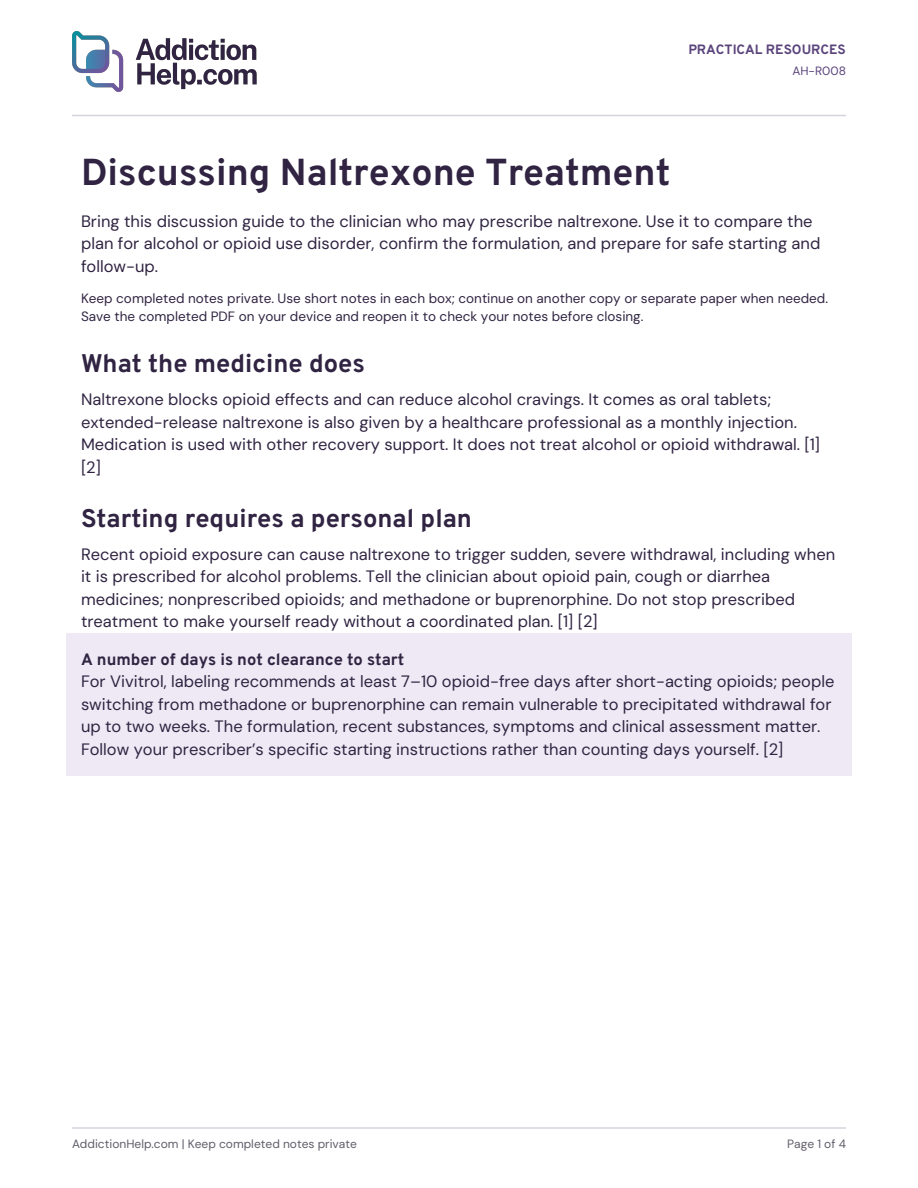
AddictionHelp.com · Practical resources
Discussing Naltrexone Treatment
Bring this discussion guide to the clinician who may prescribe naltrexone. Use it to compare the plan for alcohol or opioid use disorder, confirm the formulation, and prepare for safe starting and follow-up.
4-page fillable PDF · Free · No signup
Finding a Medication Plan You Can Continue
A reasonable next step is to ask for an assessment and explain your preferences. You can want a nonopioid medicine while still considering the practical benefits of other options. The worksheet gives you a place to record questions about starting, appointments, side effects, cost, and follow-up.
Compare treatment medications, explore help finding treatment, and use recovery resources to identify support beyond the prescription. The aim is a plan you can safely start and continue, with help available when circumstances change.
Frequently Asked Questions
Is Naltrexone a Narcotic?
Naltrexone is an opioid antagonist, or blocker, rather than an opioid pain reliever. It is a prescription medication with no federal controlled-substance schedule.[1]
Does Naltrexone Cause Physical Dependence?
Do You Need a Special Clinic for Naltrexone?
Can You Stop Naltrexone Without Withdrawal?
Is Naltrexone an Opioid?
It is an opioid antagonist that blocks receptor activity rather than activating receptors like methadone or buprenorphine. It does not produce an opioid high.[2]
Get Treatment Help
If you or someone you love is struggling with addiction, getting help is just a phone call away, or consider trying therapy online with BetterHelp.
Exclusive offer: 20% Off BetterHelp*Following links to the BetterHelp website may earn us a commission that helps us manage and maintain AddictionHelp.com. *Get 20% off your first month of BetterHelp. Offer valid for new BetterHelp users only. Offer cannot be combined with insurance.

- Fact-Checked
- Editor