How Does Naltrexone Work?
Naltrexone blocks opioid receptors and can help with alcohol or opioid use disorder. Tablets and monthly injections differ in their routine, starting requirements, and implications for pain care.


Battling addiction & ready for help?
On this pageJump directly to a section.Show topicsHide topics
How Naltrexone Helps With Alcohol and Opioid Treatment
If you are considering naltrexone, you may want to know what it will actually change: cravings, the effects of a drink, or the risk of returning to opioids. Naltrexone blocks opioid receptors and can help treat alcohol or opioid use disorder. It is available as tablets and as a longer-acting injection, with different practical requirements.[1][2]
For alcohol treatment, it can reduce the urge to drink. For opioid treatment, blocking opioid effects can support continued recovery after an adequate opioid-free period. It does not guarantee that cravings disappear, and it does not remove the need for a safe starting plan and follow-up.[1][3]
Trying to overcome naltrexone’s blockade with more opioids can cause a fatal overdose. Call 911 for suspected overdose and give naloxone if available. Naltrexone is an ongoing treatment medicine, not an emergency overdose-reversal medicine.[3]
For suicidal or mental health distress in the United States, call or text 988. Call 911 for immediate danger or a medical emergency.[4]
- Naltrexone is an opioid antagonist: it binds to opioid receptors without activating them as opioid agonists do.[2]
- Naltrexone can reduce alcohol cravings, but it does not prevent alcohol intoxication or treat acute alcohol withdrawal.[5][3]
- Naltrexone does not produce opioid physical dependence. Stopping it can still change overdose risk if opioid use resumes.[1][3]
- Starting too soon after opioids can cause sudden withdrawal severe enough to require hospitalization.[3]
What an Opioid Antagonist Does
An antagonist occupies a receptor without producing the same activation as an agonist. Naltrexone competes with opioids at these sites and can reduce or block their effects. This includes effects from heroin, fentanyl, and prescribed opioid pain medicines. The blockade can be overcome; it is not an overdose-proof barrier.[2]
Methadone and buprenorphine work differently. They activate opioid receptors to reduce withdrawal and cravings, with buprenorphine acting as a partial agonist. All are treatment options. Choosing one is a medical and practical decision, not a test of whether someone is committed enough to recovery.[6][7]
How Naltrexone Works for Opioid Use Disorder
Naltrexone can help prevent a return to opioid use after withdrawal has been managed. The extended-release injection, Vivitrol, supplies medication over about a month. It removes the need to take a tablet every day, but follow-up appointments, support, and overdose prevention still matter.[3]
Opioid blocking is only part of treatment. Cravings, stress, pain, relationships, and access to care can still need attention. If you continue to feel a strong urge to use, tell the prescriber. A follow-up conversation can address support, medication fit, or another treatment option instead of assuming the medicine has solved everything.[1]
Why Starting Naltrexone Can Be Difficult
Unlike medication used to relieve opioid withdrawal, naltrexone requires an adequate opioid-free period before starting. That interval can be difficult to complete. A U.S. randomized trial comparing extended-release naltrexone with buprenorphine-naloxone found that fewer participants successfully started naltrexone. Among participants who did start their assigned medication, relapse outcomes were similar.[8]
That distinction matters when choosing care: a medicine’s potential benefit depends partly on being able to start it safely. Ask about medical detox and withdrawal support, but do not assume everyone needs the same setting or that completing detox guarantees an uncomplicated first dose.[3]
How Naltrexone Works for Alcohol Use Disorder
Alcohol affects several systems in the brain, including the body’s own opioid signaling. Naltrexone’s opioid-blocking action is thought to contribute to reduced alcohol reward and consumption, although the full mechanism in alcohol treatment is not established. The practical benefit is help reducing the urge to drink, not a guarantee that alcohol becomes unrewarding.[2][5]
Naltrexone does not cause the alcohol-triggered reaction associated with disulfiram. It also does not make drinking safe or prevent intoxication. Someone taking it can still become impaired, and alcohol withdrawal requires a separate assessment when a person cuts down or stops.[2][3]
Does Naltrexone Work if Your Goal Is Drinking Less?
Reducing heavy drinking can be part of a treatment discussion. Explain your goals and usual drinking pattern so the clinician can choose the medication, formulation, and starting plan with you. Vivitrol’s label specifies that a person being treated for alcohol dependence should not be actively drinking at the first injection.[5][3]
Tablets and injections should not be treated as interchangeable instructions. For details about alcohol-specific treatment goals and prescribing approaches, explore naltrexone for alcohol use disorder. Recent opioid use must still be assessed even when alcohol is the reason for treatment.[2]
Why an Opioid-Free Period Is Needed Before Naltrexone
In someone physically dependent on opioids, abruptly blocking opioid activity can trigger precipitated withdrawal. This can cause severe vomiting, diarrhea, fluid loss, and other symptoms requiring hospital care. It is not merely an uncomfortable version of a routine first-dose side effect.[2]
Product labeling recommends at least 7 to 10 opioid-free days for people previously dependent on short-acting opioids. People transitioning from methadone or buprenorphine may remain vulnerable for as long as two weeks. Elapsed time alone does not establish that starting is safe. The clinician needs to assess your actual opioid use and condition.[2][3]
Make a Plan for the Days Before Naltrexone
Ask: “How will you help me manage withdrawal, and what should I do if I use opioids before the appointment?” Include prescribed pain medicine and tramadol when describing recent use. An accurate history helps the team choose a safer plan.[3]
A urine test or naloxone challenge may be part of assessment, but neither can guarantee that precipitated withdrawal will not occur. If the waiting period is not workable, ask about other treatment options. You do not need to attempt an unsupported transition to prove that you deserve care.[3]
Daily Tablets or a Monthly Naltrexone Injection?
The medicine blocks opioid receptors in either form. The choice also affects your routine, how quickly a treatment change can be made, and how pain care is planned. Bring up cost, transport, previous side effects, and upcoming procedures before selecting a formulation.[2][3]
| Practical question | Tablets | Vivitrol injection |
|---|---|---|
| How is it taken? | By mouth according to the prescribed schedule, commonly daily. | By a healthcare professional, about once a month. |
| What needs planning? | Taking doses consistently and obtaining refills. | Appointment access, coverage, and the next injection. |
| What if treatment needs to change? | The prescriber can plan a change to upcoming doses. | Medication continues to release after the injection; it cannot simply be removed. |
| Are there formulation-specific concerns? | Tablet tolerability and missed-dose instructions. | Injection-site reactions and prolonged opioid blocking. |
These differences are described in the product labels. Neither option eliminates the need to review opioid exposure, liver health, or naltrexone side effects.[2][3]
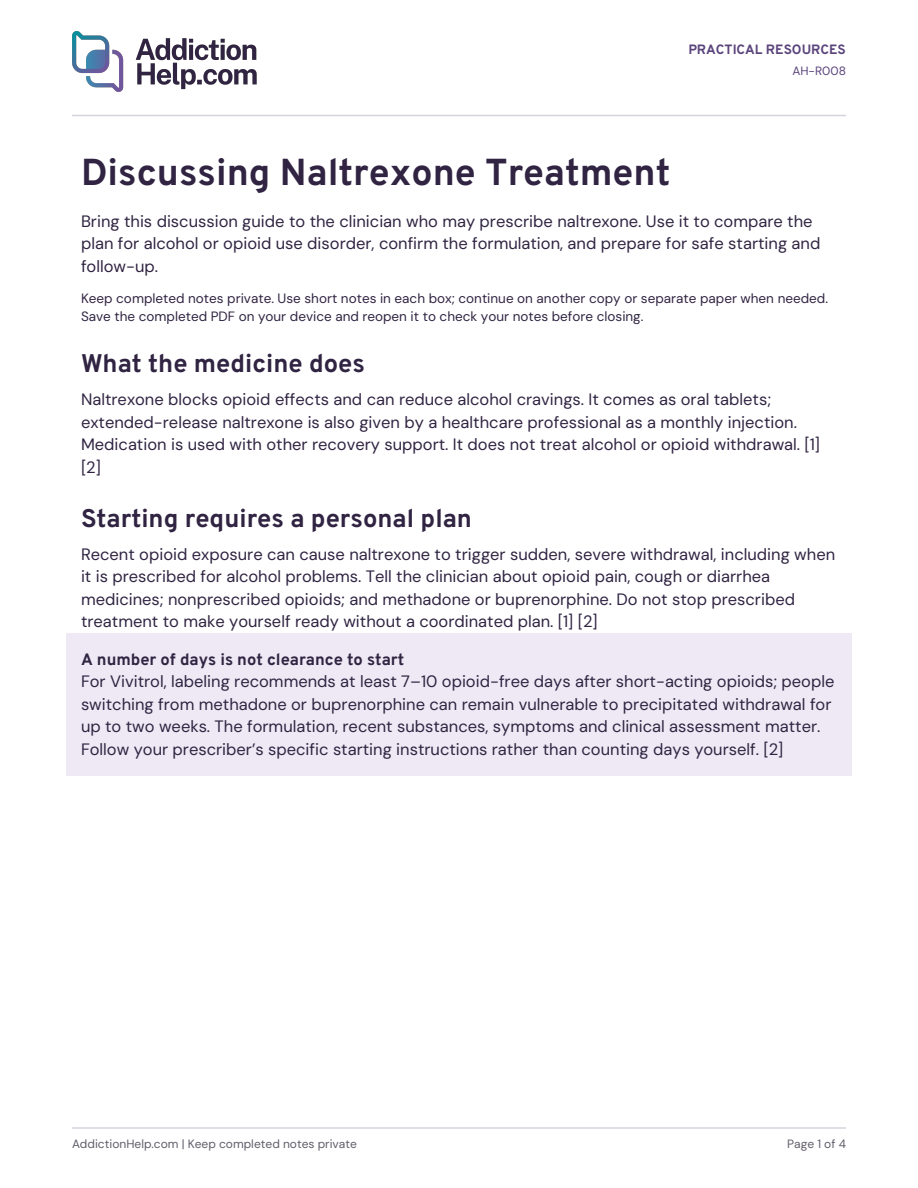
AddictionHelp.com · Practical resources
Discussing Naltrexone Treatment
Bring this discussion guide to the clinician who may prescribe naltrexone. Use it to compare the plan for alcohol or opioid use disorder, confirm the formulation, and prepare for safe starting and follow-up.
4-page fillable PDF · Free · No signup
What Naltrexone Means for Pain Care and Overdose Prevention
Tell dentists, surgeons, and emergency clinicians that you take naltrexone, including the formulation and last dose date. Opioid pain medicines may be less effective. Nonopioid or regional pain treatment may be appropriate; when opioids are necessary, specialists may need to provide closely monitored care. Do not increase pain medication yourself to overcome blocking.[2][3]
Overdose risk also changes when treatment wears off, doses are missed, or treatment stops. After time without opioids, a previously tolerated amount can be dangerous. Keep naloxone available and discuss a plan for missed appointments or a return to use with the treatment team.[3]
Choosing Naltrexone Treatment and Ongoing Support
A useful medication discussion connects the science to your life: what you want to change, whether you can safely start, what appointments cost, and who will help if problems arise. Use the decision worksheet to collect those questions and compare naltrexone treatment options.
If you need a clinician or additional support, explore help finding treatment and addiction recovery resources. You can ask for an assessment without already knowing which medicine is right for you.
Frequently Asked Questions
Does Naltrexone Block All Opioid Effects?
Naltrexone can reduce or block opioid effects, including pain relief, but the blockade can be overcome. Taking larger opioid amounts to test it can cause fatal overdose.[2]
Does Naltrexone Help Alcohol Cravings?
Can You Feel Naltrexone Working?
Naltrexone does not produce an opioid high. You may notice changes in cravings or drinking, but a particular sensation is not required and does not prove effectiveness. Side effects such as nausea or sleepiness can still occur.[1]
How Is Naltrexone Different From Methadone or Suboxone?
Get Treatment Help
If you or someone you love is struggling with addiction, getting help is just a phone call away, or consider trying therapy online with BetterHelp.
Exclusive offer: 20% Off BetterHelp*Following links to the BetterHelp website may earn us a commission that helps us manage and maintain AddictionHelp.com. *Get 20% off your first month of BetterHelp. Offer valid for new BetterHelp users only. Offer cannot be combined with insurance.

- Fact-Checked
- Editor

